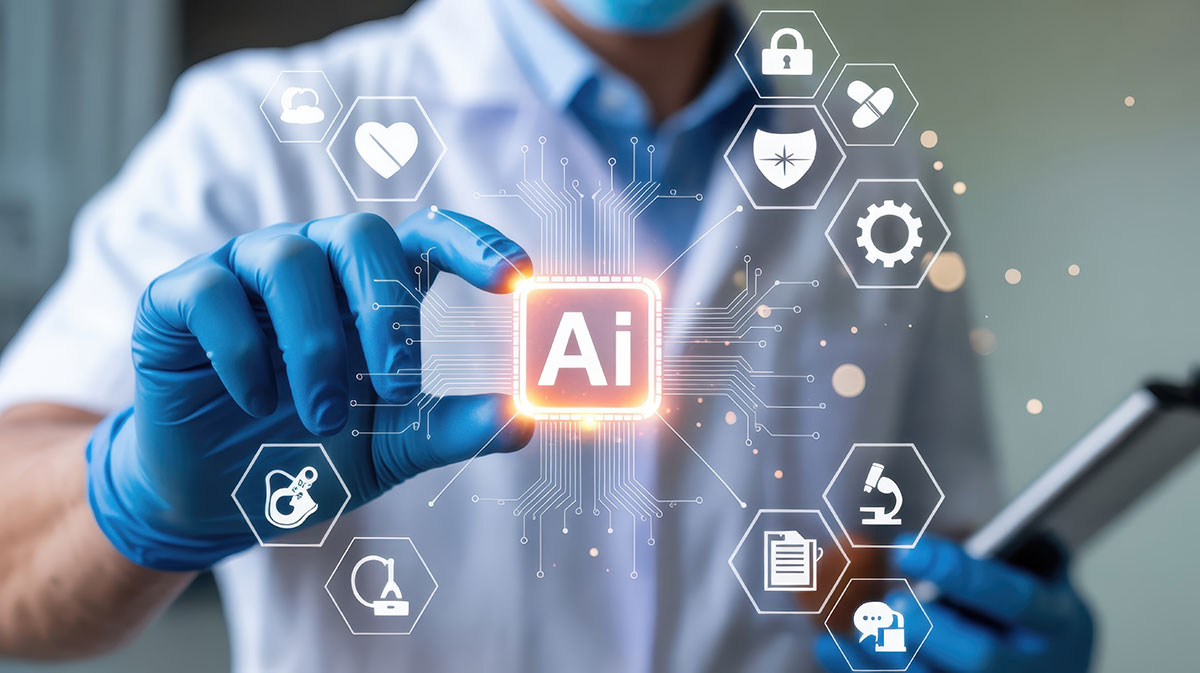
A New Era of Understanding the Immune System
Over the past several years, I have watched machine learning transform many areas of biology. Yet its most profound impact may be on how we understand and predict human disease. The immune system is incredibly powerful, but it is also highly complex. For decades, we studied it in snapshots, trying to understand its behavior through isolated experiments or broad population averages. That approach helped us uncover foundational principles, but it often left us with more questions than answers.
Today, machine learning is allowing us to see the immune system in motion. It can analyze millions of data points from cells, proteins, genes, and patient histories to reveal subtle patterns that would otherwise remain hidden. These patterns often appear long before symptoms ever do. This is giving rise to what I like to call a digital immune system, an analytical layer that works alongside our natural defenses to signal trouble while it is still preventable.
The Promise of Predicting Disease Early
One of the most exciting aspects of combining immunology with machine learning is the possibility of predicting disease before it ever fully develops. Most illnesses do not appear overnight. There are early shifts in immune activity, changes in gene expression, and small disruptions in cellular communication that mark the beginning of disease. These early signs were nearly impossible to detect by traditional methods.
Machine learning models, however, excel at spotting patterns across vast datasets. When we feed them immune measurements from thousands of individuals, they begin to learn the difference between a healthy immune system and one that is trending toward inflammation, infection, or chronic disease. The models can even identify risk signatures that are invisible to the human eye.
Imagine being able to flag the earliest stages of autoimmune disease before tissue damage occurs. Imagine recognizing the transition from mild inflammation to dangerous cytokine activity before it leads to lung injury. Or imagine detecting the very first signs of cancer related immune suppression before a tumor becomes difficult to treat. These possibilities are no longer theoretical. They are emerging in labs and clinics right now.
How Machine Learning Learns from Immune Data
To appreciate the power of these models, it helps to understand what they are actually studying. When we analyze the immune system, we often look at multiple layers of information. There are genes that switch on and off during infection. There are proteins that signal cells to attack or calm down. There are cell types that increase in number during illness and others that quietly disappear.
Each of these features tells a small part of the story. But when we combine them into a single dataset, the information becomes incredibly difficult for humans to interpret. A single person might contribute thousands of measurements. A study with hundreds of participants can quickly reach into the millions.
Machine learning thrives in this environment. Instead of judging each measurement individually, a model looks for relationships between them. It learns that a small rise in one protein combined with a slight drop in a specific immune cell can predict an upcoming flare in an autoimmune condition. Or it learns that certain gene expression patterns consistently appear weeks before a viral infection becomes symptomatic.
This ability to detect early signatures is what makes machine learning so powerful. It is not guessing. It is recognizing patterns that repeat across many individuals and using them to make accurate predictions.
Building a Digital Immune Partner
As machine learning becomes more integrated into medical decision making, I see it not as a replacement for scientific expertise but as a partner. The immune system is still too complex for any model to fully understand. There are environmental influences, infections, and personal histories that shape our immune responses in unique ways. Machine learning does not replace the need for human perspective. Instead, it helps us narrow down the possibilities and focus our attention where it matters most.
For clinicians, these models can serve as early warning systems. They can alert physicians to inflammation trends that merit closer monitoring. They can suggest which patients are likely to respond to immunotherapy. They can even help determine when the immune system is beginning to recover after illness.
For researchers like myself, machine learning opens up new pathways of discovery. When a model highlights a surprising relationship between two biomarkers, it gives us a starting point for further investigation. It helps us design better experiments and refine our understanding of disease mechanisms.
Real World Impact on Patient Health
Although machine learning is still growing in its role, its impact on patient health is already becoming clear. Early disease prediction leads to earlier intervention. Earlier intervention leads to better outcomes. It is that simple.
Consider conditions like sepsis, where early detection can mean the difference between recovery and severe organ damage. Machine learning models are now being developed to monitor immune signatures in real time and recognize the earliest deviations from healthy patterns.
In chronic diseases such as asthma or inflammatory bowel disease, these models can help predict flare ups before they occur, allowing patients to adjust treatments proactively. In cancer, they are helping identify which immune pathways are being suppressed, improving our ability to design personalized therapies.
The future of medicine is not just reactive. It is predictive, preventive, and deeply personalized.
Looking Forward
We are still in the early stages of building what I call a digital immune system. As we gather more data and refine more models, I believe we will reach a point where predicting immune related disease becomes routine. It will not replace medical judgement, but it will guide it with extraordinary clarity.
Machine learning gives us the chance to transform our relationship with disease. Instead of responding only when symptoms emerge, we will understand and act on the earliest shifts in biology. For someone like me, who has spent years studying how the immune system behaves under stress, that possibility is both inspiring and grounding.
We are finally beginning to read the immune system in real time. And that may be the key to better health for all of us.